
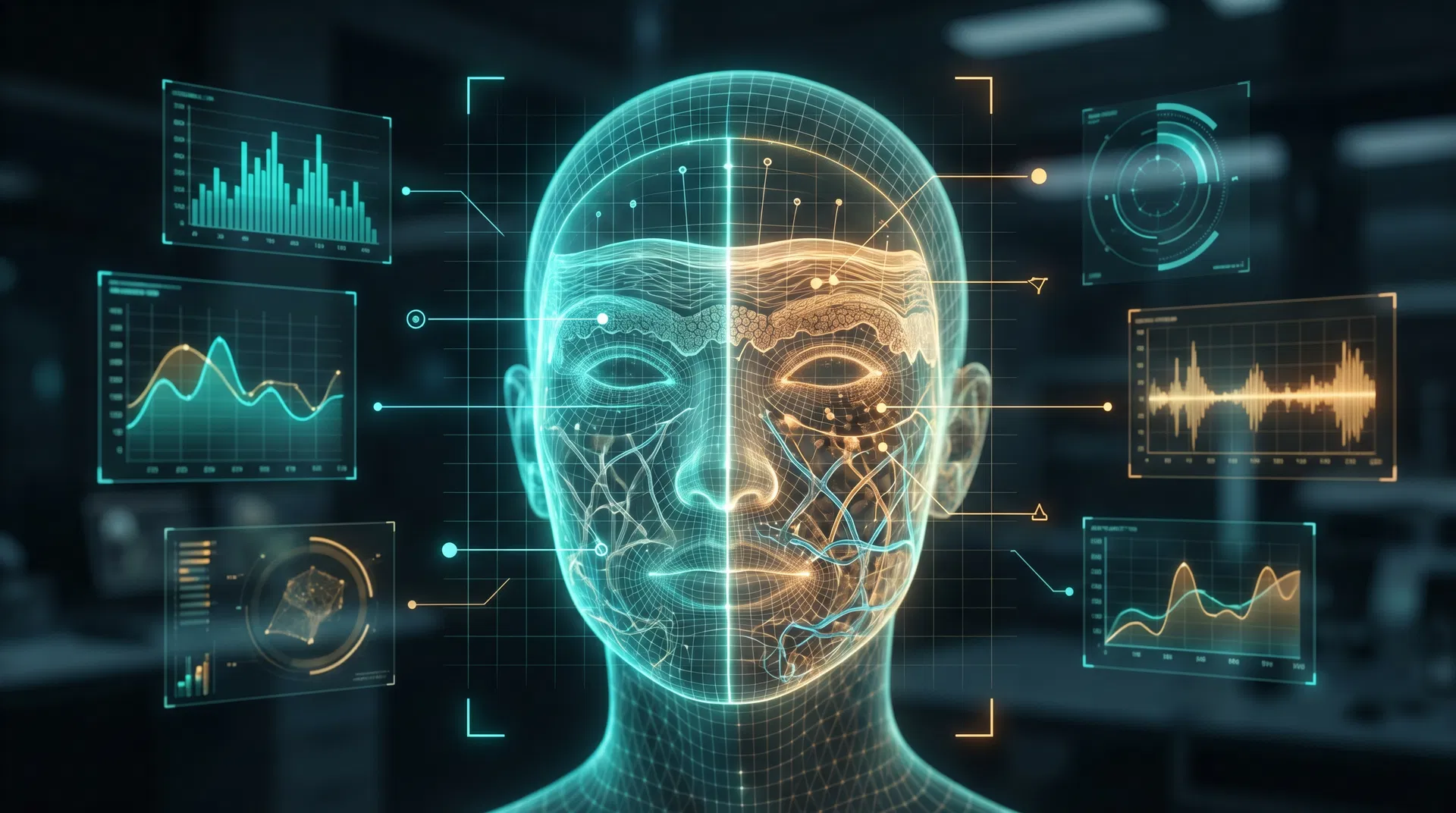
Artificial intelligence is transforming nearly every field of medicine, but perhaps nowhere is the impact more visible — literally — than in dermatology. At NexGenEsis Healthcare, Dr. Eujin Cho brings a unique perspective to this revolution, having conducted pioneering AI research at the University of Hawaii Cancer Center.
The Challenge of Skin Diagnostics
The human skin is the body's largest organ, and its health reflects everything from UV exposure and nutrition to hormonal balance and systemic disease. Traditional skin assessment relies heavily on visual inspection — a process that, while effective in experienced hands, is inherently subjective and limited by what the human eye can detect.
Many skin conditions, including early-stage cancers, are difficult to distinguish from benign lesions without biopsy. And when it comes to anti-aging assessment, quantifying subtle changes in collagen density, pigmentation depth, or skin texture has historically been more art than science.
How AI Changes the Game
AI-powered skin analysis systems use deep learning algorithms trained on millions of dermatological images to detect patterns invisible to the naked eye. These systems can:
Quantify skin age vs. chronological age by analyzing texture, pore size, wrinkle depth, and pigmentation patterns at a microscopic level.
Map collagen and elastin density through advanced imaging, providing objective measurements of skin health that guide treatment decisions.
Track treatment progress with precision, comparing before-and-after images at the pixel level to measure improvements that might be too subtle for visual assessment alone.
Identify early warning signs of skin conditions, including pre-cancerous changes, that might otherwise go unnoticed until they become more advanced.
Dr. Cho's AI Research Background
Dr. Eujin Cho's work at the University of Hawaii Cancer Center focused on applying artificial intelligence to dermatological diagnostics — research that directly informs her clinical practice at NexGenEsis. Her unique combination of clinical dermatology expertise and AI research experience means patients benefit from both cutting-edge technology and deep medical knowledge.
This dual expertise is particularly valuable in Hawaii, where the diverse population and high UV exposure create unique dermatological challenges. AI systems trained primarily on lighter skin tones can miss conditions in patients with darker complexions — a limitation Dr. Cho actively works to address in her practice.
What This Means for Patients
At NexGenEsis, AI-powered skin analysis isn't a gimmick — it's a diagnostic tool that enables more precise, personalized treatment plans. When you come in for a skin consultation, advanced imaging and AI analysis provide a detailed map of your skin's current state, identifying areas of concern and establishing a baseline for measuring treatment effectiveness.
This data-driven approach means your anti-aging or skin health treatment plan is based on objective measurements, not guesswork. And as treatment progresses, AI analysis tracks improvements with a level of precision that ensures you're getting real, measurable results.